


Last year a band called Geese appeared to come from nowhere.
Strong reviews. Industry buzz. The kind of momentum that looks organic until it isn’t. Within thirty days the machinery that propelled them, artificially, was visible: the media agents, manufactured placements, engineered credibility. The band’s “organic” or “discovered” nature disintegrated fast. Were people shocked? Some who still believe that the cream rises to the top, maybe. But for many, the reaction was a shrug. As in, “this is how it goes now.” But it has always kinda gone this way, really.
This isn’t new. The machinery is.
Manufactured awareness has always existed. Press agents. Payola. Manufactured teen idols. Promoters creating publicity stunts. The entire infrastructure of 20th century entertainment promotion was engineered. A publicist’s job has always been to make the manufactured look organic.
What’s new isn’t the manufacturing. It’s the timeline.
The exposure infrastructure, the Reddit threads, YouTube breakdowns, Substack investigations, comment sections operating in real time across every platform simultaneously, now moves faster than the machinery creating the narrative. It likely took months of planning for the Geese launch. It was over in only a few weeks. What used to sustain a brand story, time for the audience to dream, to reflect, and to adopt the new trend, now expires in thirty days before those stages can manifest. Sometimes less.
Three curtains, three weeks
This summer three very different curtains got pulled back in rapid succession.
Geese. A band whose buzz was engineered, exposed, and forgotten within a month.
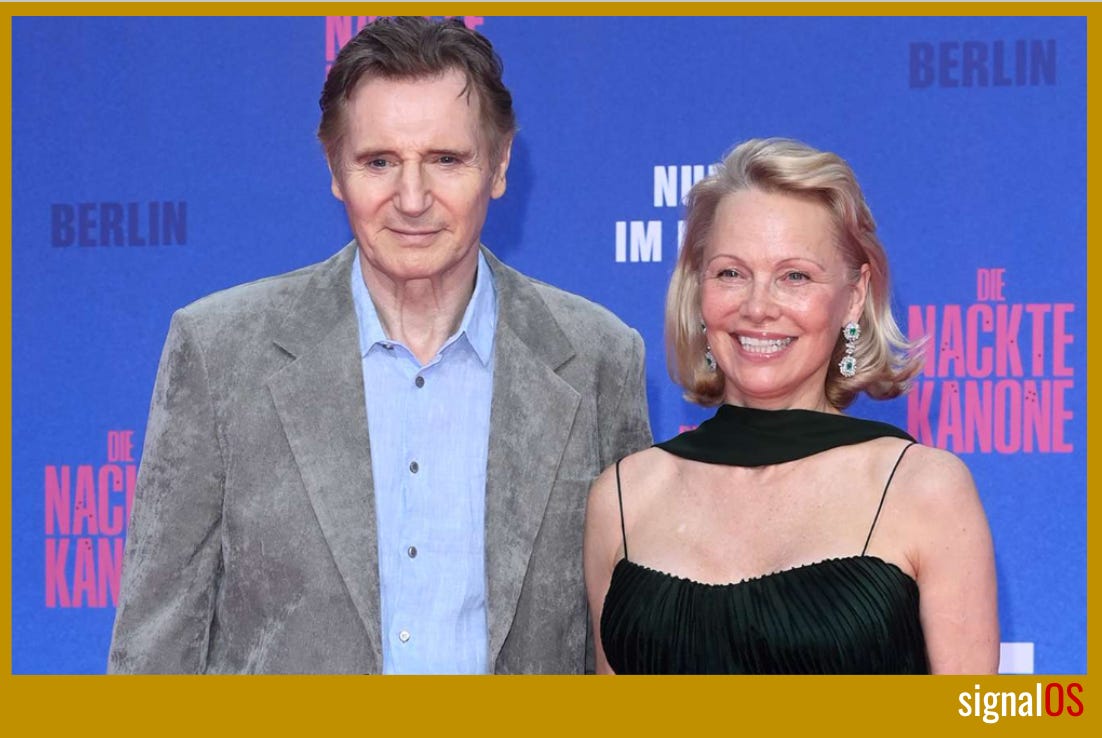
Liam Neeson and Pamela Anderson. Their apparent romance during The Naked Gun press tour, the flirty red carpet appearances, the “I’m madly in love with her” quotes, was reported by TMZ to have been orchestrated by their PR teams and Paramount Pictures. The two hadn’t seen each other from the time filming wrapped in June 2024 until the press tour launched more than a year later. The stunt worked commercially. The film grossed $88 million on a $45 million budget. But the relationship was exposed within weeks. Anderson herself appeared at the Deauville Film Festival shortly after and said: “I do not and will never feed into PR stunts. That would be a death sentence.”
The curtain being pulled back on the curtain being pulled back.
REI. An Instagram ad for a Van Rysel bicycle ran for a full week before Reddit users noticed the bike had two sets of handlebars, multiple chains, and blurry lettering. The image had been altered by a Meta AI personalization tool that had auto-enrolled REI without its knowledge or consent. The comment that cut deepest: “REI using AI slop now. So much for caring about the environment.” A brand whose entire identity is built on outdoor authenticity, betrayed by infrastructure it didn’t know it was running. An REI employee reportedly commented that the company “is absolutely obsessed with AI now.” REI pulled the ad and unenrolled from the Meta tool. The damage to the brand resonance was already done.
Three examples. Three industries. Three different kinds of manufacturing: synthetic buzz, synthetic relationship, and a synthetic algorithm. The exposure speed was swift across all three. Faster than the idea could become dreamy.
The structural change
Two things inverted simultaneously and the combination is what makes our current era different.
Creating awareness is cheap. AI content, paid media, platform distribution, influencer infrastructure. The cost of manufacturing a narrative has dropped significantly and continues to drop.
Exposing manufactured awareness also got cheaper, or more organic. Where manufacturing awareness becomes more synthetic, exposing it is becoming more organic. Reddit, YouTube, Substack, comment sections, real-time social forensics…the cost of pulling back a curtain is now effectively zero, and the people doing it are faster and more social-clout-motivated than they’ve ever been (everybody wants to be an influencer).
When only one of these is true the system is unstable but manageable. When both are true simultaneously the economics of manufactured awareness collapse. You spend the same resources to manufacture buzz that now expires in thirty days instead of eighteen months. The ROI has inverted even when the execution is well done.
Awareness is a fading KPI
Awareness was always a proxy metric. It measured reach, not weight. Whether people had heard of you, not whether they believed you, trusted you, or would act on that hearing.
For most of the 20th century that proxy held because awareness was scarce and manufacturing it sustainably was expensive enough to deter casual fraud. Both conditions are gone.
High awareness numbers now mean less than they ever have because the audience has learned to discount awareness that isn’t backed by something real. The metric is losing signal value in real time. A brand can generate significant awareness numbers for something that collapses under thirty seconds of Reddit scrutiny. The number looked good. The thing it was measuring was already gone.
The brands still optimizing for awareness are pulling a lever that’s disconnecting from the outcome it used to drive.
What this means for practitioners
The Geese story isn’t a cautionary tale about fabricating relevance. It’s a structural observation about what the infrastructure now makes possible for any audience, anywhere, at any time.
Your manufactured narrative: the engineered relationship, the AI-altered image, the synthetic buzz, will be exposed. Not because your audience is more sophisticated, though they are. Because the tools for exposure are now faster, cheaper, and more widely distributed than the tools for manufacturing. The dispelling word of mouth is more compelling than the actions being presented. If you’re watching Love Island, the chatter around that show is more about dispelling the relationships than believing in them.
The only awareness worth building is the kind that survives scrutiny. Which means the thing has to be real. The story has to emerge from something that actually happened. The image has to be what it claims to be.
This is the same insight Do, Don’t Show was pointing at in 2015. It’s more urgent now than it was then, because the window between manufacturing and exposure has compressed from months to days.
- Real stories outlast manufactured ones.
- Paid reach costs more than genuine human presence.
- Manufactured awareness expires faster than it costs to create.
The era of manufactured scale isn’t ending because authenticity became a value. It’s ending because the economics stopped working.
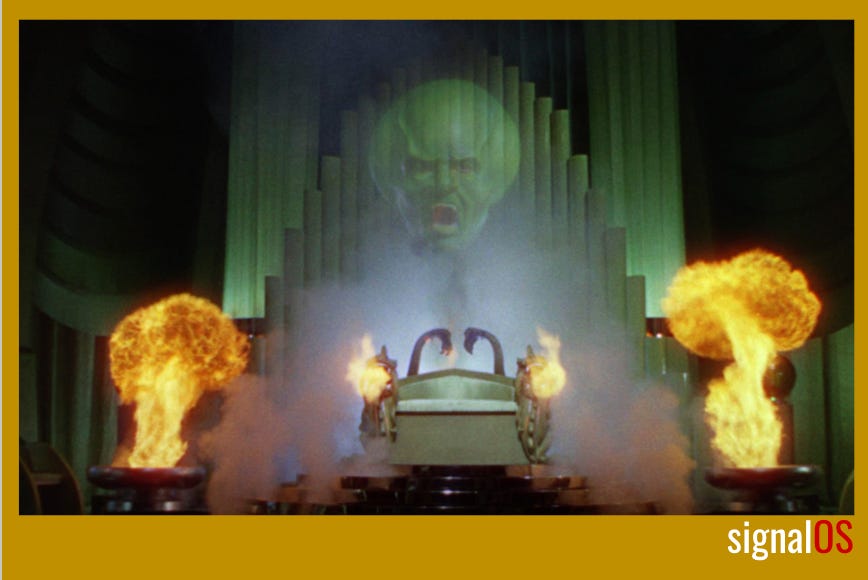
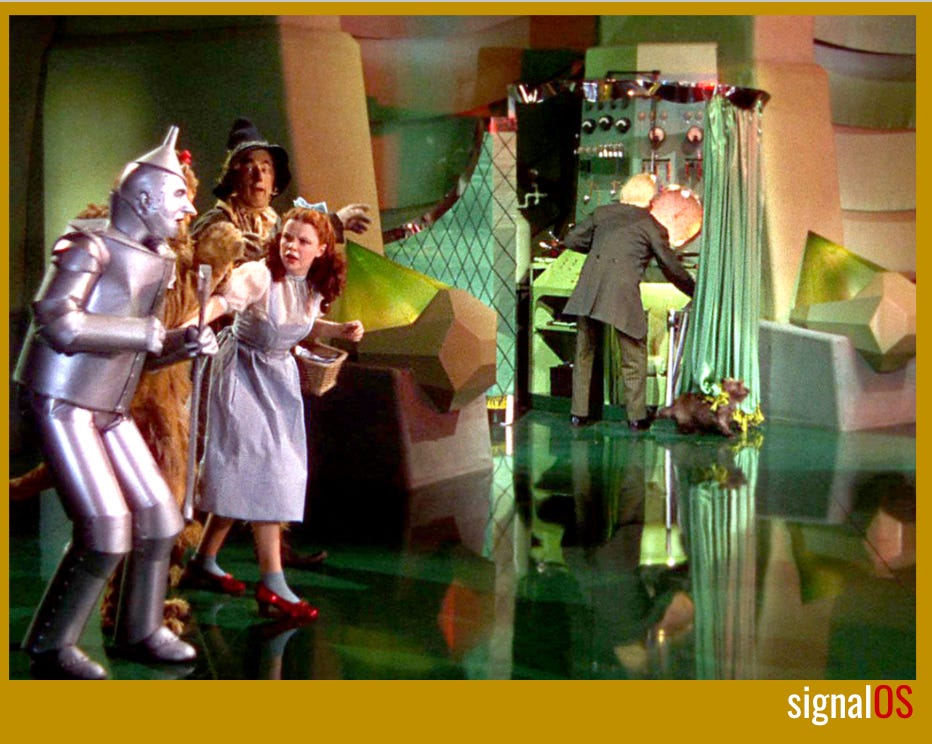
The wizard didn’t disappear.
The curtain did.