


History sure does rhyme
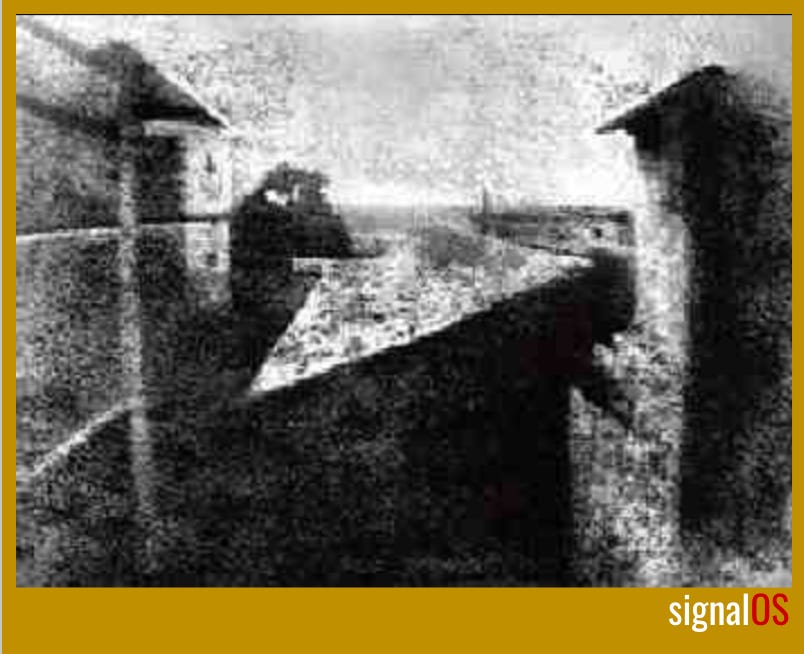
Around 1827 the first fixed-image photograph was “taken,” from a window in a French estate halfway between Dijon and Lyon. Rolled-up film was invented about fifty years later, and by 1900 Kodak cameras were prevalent. That’s a lifetime, or two generations, from invention to commercialization.
Before photography, illustration and painting were the main ways to capture images. When photography became popular, both illustration and painting went through significant disruption and evolved and innovated into other uses and applications…over decades. Photography was such a different medium, a whole new category, and required less technical skill than either illustration or painting. Plus, a person could tell the difference between the three.
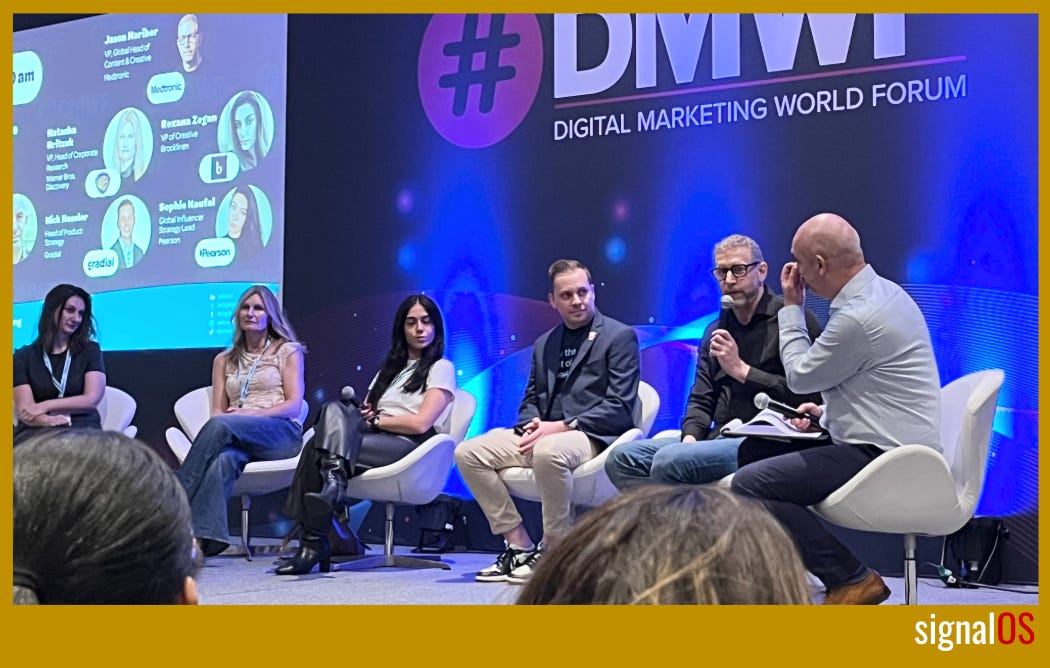
I was on a panel last week at the Digital Marketing World Forum (DMWF), discussing the impact of AI on content development and creative production. The panelists were a mix of creatives, researchers, and content experts. There was definitely a trend: people like the super-human ability of AI until it replicates being…human.
Unlike when photography disrupted other image-making, generative AI isn’t a new medium, it’s a dupe, a spoof, a seriously good copy. It has the potential to be a new form as photography was in a world of illustration, but that’s not how it’s being presented or utilized in the content and creative realm. Right now it’s being used to spoof things. It’s directed-forgery, or assisted-replication, or just…fake. It’s efficient, but unlike photography it’s not as much an invention as it is an extraction engine, like a mining operation with a near limitless reservoir of data. (There could be a parallel in natural diamonds and lab-grown diamonds, but that’s for another post).
Now what?
So, what do content and creative professionals do with this new engine? Right now, it seems they like the inexpensive and time-saving spoofing, and some are testing the boundaries of what would be accepted by which audience. Ask AI to make something from scratch; some folks are OK with that. Use AI to help a workflow; maybe a better approach. Ask AI to follow tasks a drop-down menu could also do; maybe the best current use case for brands worried about authenticity.
A peer on the panel, Natasha Hritzuk, said something insightful and clear: Audiences will accept fake explosions. They won’t accept fake people. An attendee later asked: who is responsible for keeping AI from being abused? My answer was “everyone,” but “everyone” is typically where accountability goes to die.
Then another panelist, Sophie Naufal, raised something that I find culturally problematic, but also maybe the audience I’m focused on isn’t the same as the one she was identifying: AI-generated influencers are already building real followings, with audiences engaging with them as if they are real people.
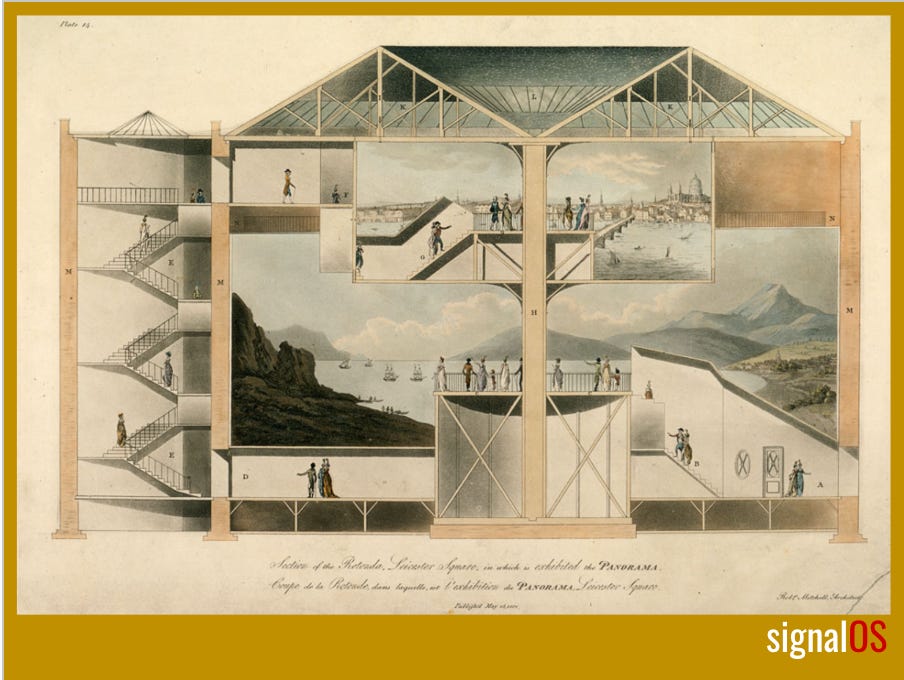
In truth, audiences have always been interested, or conditioned to, a constructed reality, illusions that entertain, teach, and inform. In the 1800s, we had “panoramas, ” these massive, 360-degree cylindrical paintings displayed inside large custom rotundas to create an immersive, virtual-reality experience. Humans have been generating and enjoying fakeness for a long time.
But…fake people are different. In Natasha’s research, when audiences discover the human presence is AI viewers stop watching (or on LinkedIn, they seem to stop reading, and often throw shade).
In the 1980s, when desktop publishing disintegrated the type-setting industry, people didn’t expect a magazine to disclose, “this cover layout was designed using software” even though this is maybe the closest thing to our AI transformation era. Desktop publishing was celebrated, it freed up hours of time, was extremely precise, adjusted for mistakes, and was significantly inexpensive.
So, do I disclose?
Here’s a way to help clarify the need for a disclosure: If a chatbot does something a dropdown menu in Word or Photoshop already does such as fixing spelling, correcting grammar, adjusting contrast, suggesting a synonym, then that’s a tool doing a tool’s job. No disclosure required.
But when AI generates the idea, mimics a tone, makes fundamental decisions on the creative approach, then that’s not a tool, that’s literally artificial intelligence. That’s spoofing human behavior. That’s where the line is.
Question one: Is the AI performing a function a non-AI tool already performed? Spell check. Grammar correction. Image sharpening. Format conversion. If yes, you’re safe. No disclosure needed.
Question two: Is the AI performing a function that previously required your judgment, your experience, your creative presence, or your genuine thinking? If yes, disclosure is required, because the audience’s trust is predicated on a human being present, who isn’t. You’re asking the AI to spoof a human, even if you’re involved, it is a hybrid, a collaboration.
Audiences might be waiting for platforms to enforce disclosure, some already are. They’re also already developing the instinct to detect when the creative is AI. The usage of AI and the outputs created will depend on your audiences. Will they care if you fake the explosions? Seems not, but will they care if you fake the human stuff; yes, very likely. Will they care if you disclose the use of AI, it seems they will too. So, what to do? Test, learn, and be true to your brand, let that lead the decision. If your actions feel inauthentic, stop.
Audiences can tell the difference between a fake explosion and a fake person. The question is whether you care.