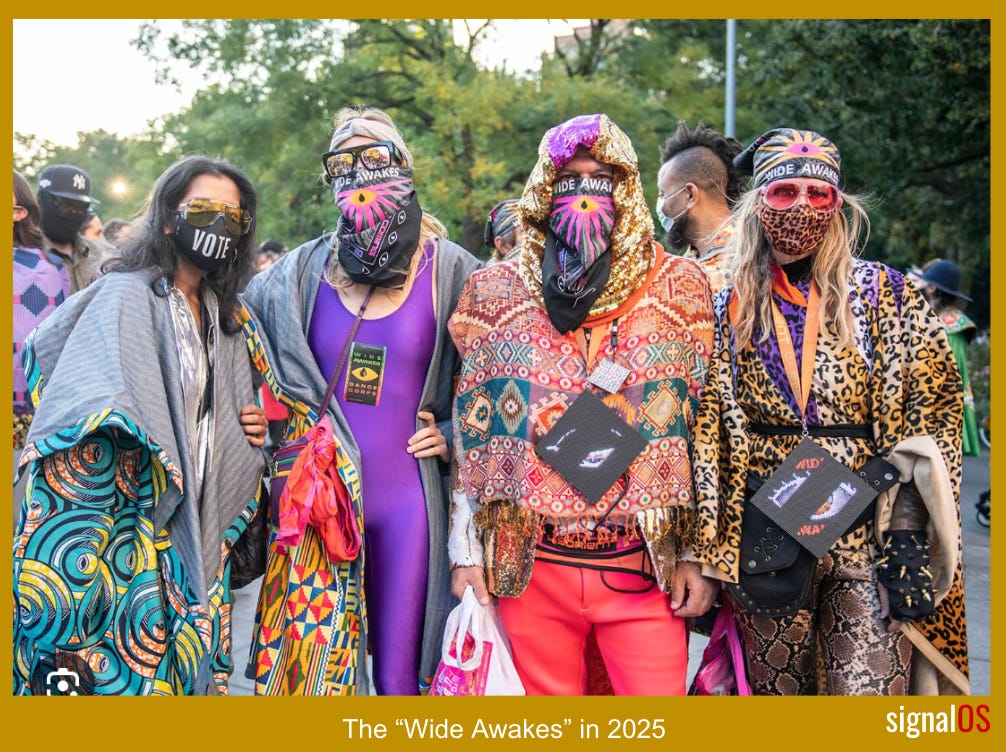

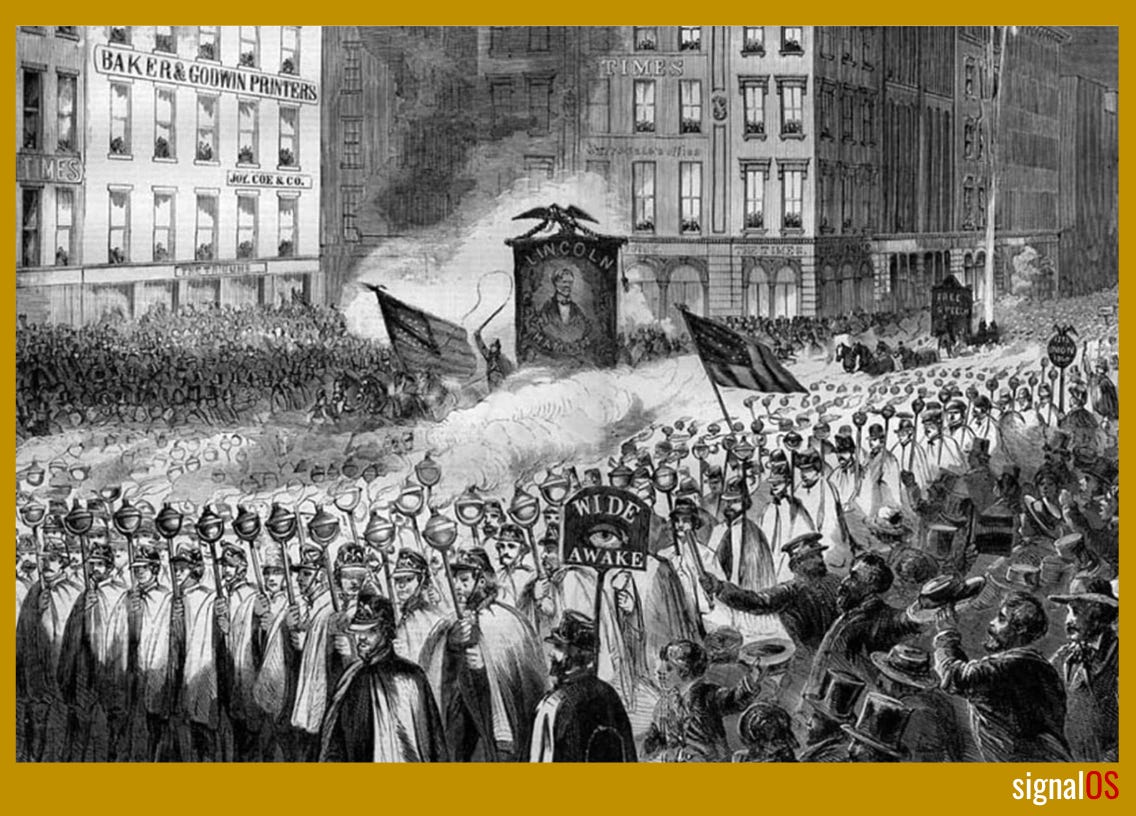
In 1854, the “Wide Awakes” emerged as a political movement (“Woke” as a term has a longer history than most people might realize). The movement lasted for 70 years, from its emergence through mainstream adoption, contestation, and then decline. The speed limiter was communications itself. Information traveled at the pace of newspapers, public speeches, horseback, and literal word of mouth.
In comparison, “Woke” began its emergence around 2010, but the movement didn’t last 70 years. It had a fifteen year lifecycle.
Similarly “Going Green” reached peak corporate adoption through the 1990s and 2000s, and collapsed into the greenwashing backlash before being replaced (mostly) by ESG around 2018. That’s a twenty-five year-ish lifecycle.
ESG entered mainstream consciousness around 2018. By 2023, major corporations were quietly removing it from their annual reports. Total lifecycle: eight years.
This is the new operating environment, and it’s accelerating.
A new movement or trend emerges (let’s call them “cultural cycles”), likely from either a reaction to a previous movement, a splinter, a reemergence or in some cases something entirely new. Resourced and active organizations and brands lean in and adopt them quickly. Some get it right. Nike’s Colin Kaepernick campaign in 2018 was a hit and his jerseys sold out overnight. Their positioning, audience, and commitment were all aligned. But wait…
Nike posted a sign at the 2026 Boston Marathon reading “Runners Welcome. Walkers Tolerated.” It was removed within 24 hours. Competitors Adidas and Altra responded immediately with their own messaging. From launch to backlash to retreat, the cycle completed in days.
Same brand. Eight years apart. The running/athletic movement had shifted, becoming more inclusive than the brand measured (or monitored). Though the message was true to the brand, the audience had moved on.
Cycles, cycles everywhere
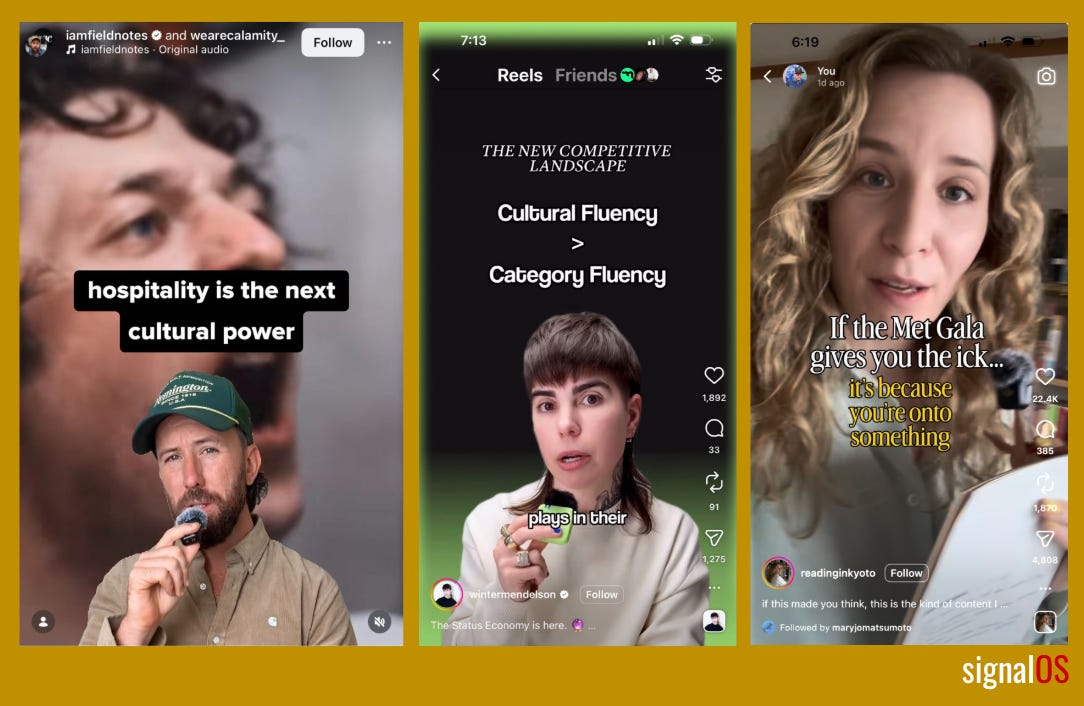
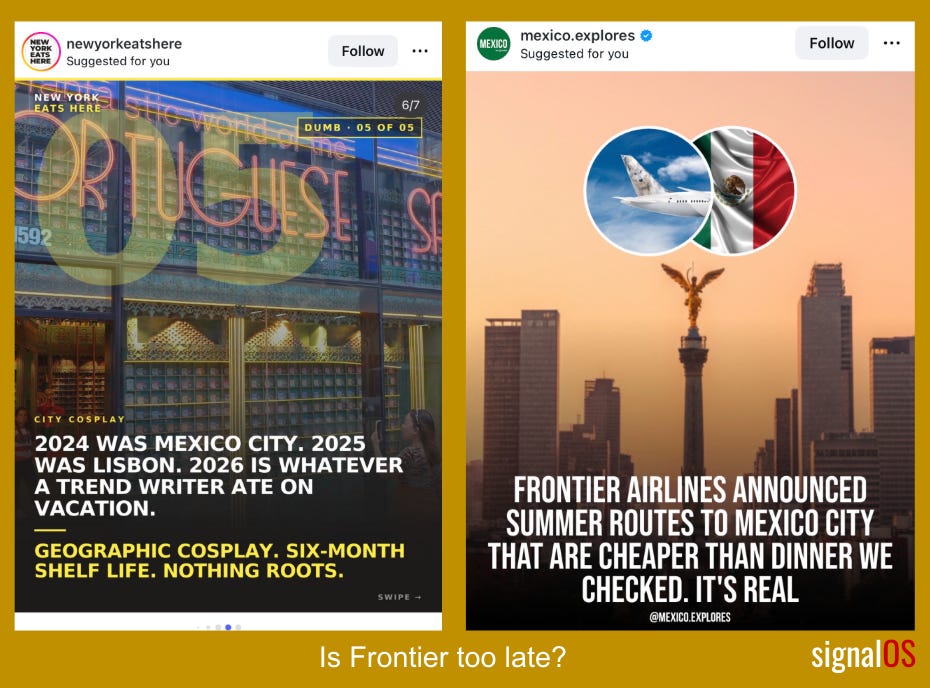
Companies can’t pivot as fast as people, especially when there are many simultaneous movements (and micro-movements). And the brands that once moved first can become quickly out of favor (American Eagle’s “has great jeans,” and GAP’s quick rebuttal).
The mechanisms compound. Communication moves ten times faster than it did fifteen years ago. Network effects mean adoption is exponential, not linear. And coordinated opposition, which used to take years to organize, now emerges nearly simultaneously through the same channels that spread the original language.
Each mechanism accelerates the others. The result is a cycle that’s compressing with every iteration.
The projection, if the current trajectory holds, in a major contemporary movement like ESG or Woke could complete its entire cycle (emergence, mainstream adoption, contestation, decline) in under two years. Some phases in weeks (see below for Ai “Slop”).
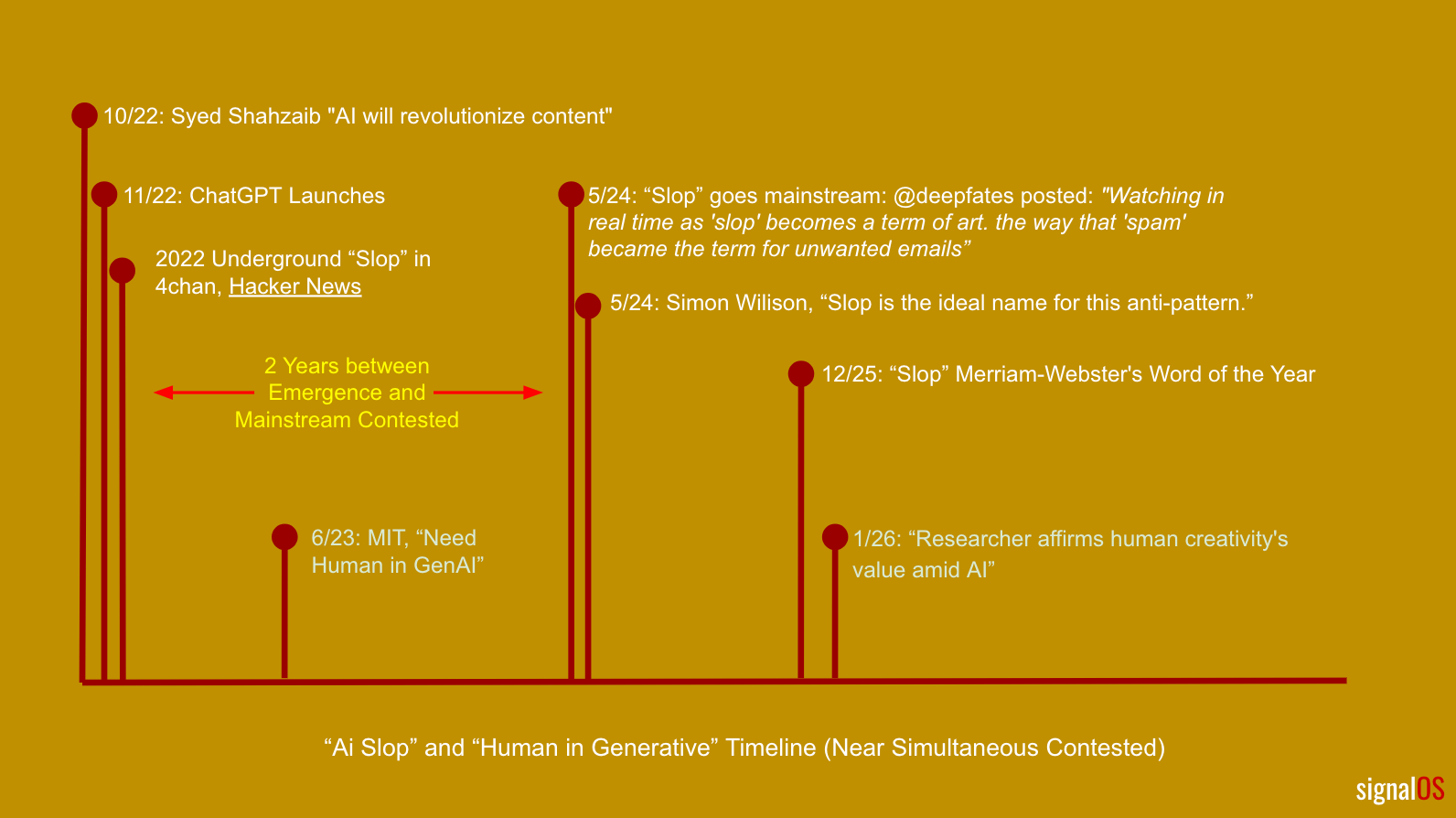
It’s a structural shift in how culture moves. And most brand and communications leaders aren’t yet attuned to the acceleration cycles of culture, still operating within historic timelines and older operating systems that can still (kinda) do the job, but poorly.
What this means for your decision-making window
In the 1990s and early 2000s you had real time. Movements emerged, you had time to study them, to evaluate alignment, time to develop strategy. You adopted when it felt safe. Opposition emerged slowly. You had room to respond. By the late 2000s, not so much.
In the current environment, by the time the language of the movement feels clearly mainstream (the moment it feels safe to adopt) the decline phase has likely already begun. Opposition doesn’t emerge years after adoption anymore. It emerges simultaneously.
The ESG example makes this concrete. Brands that adopted ESG language in 2021 did exactly what their process told them to do: they waited for clarity, evaluated alignment, adopted when it felt mainstream and safe. By 2023 they were retreating. Not because they made the wrong call, but because their decision-making process was calibrated to a cycle that no longer existed.
That is what it looks like to be one cycle behind. Or two.
Four stages. Shrinking fast.
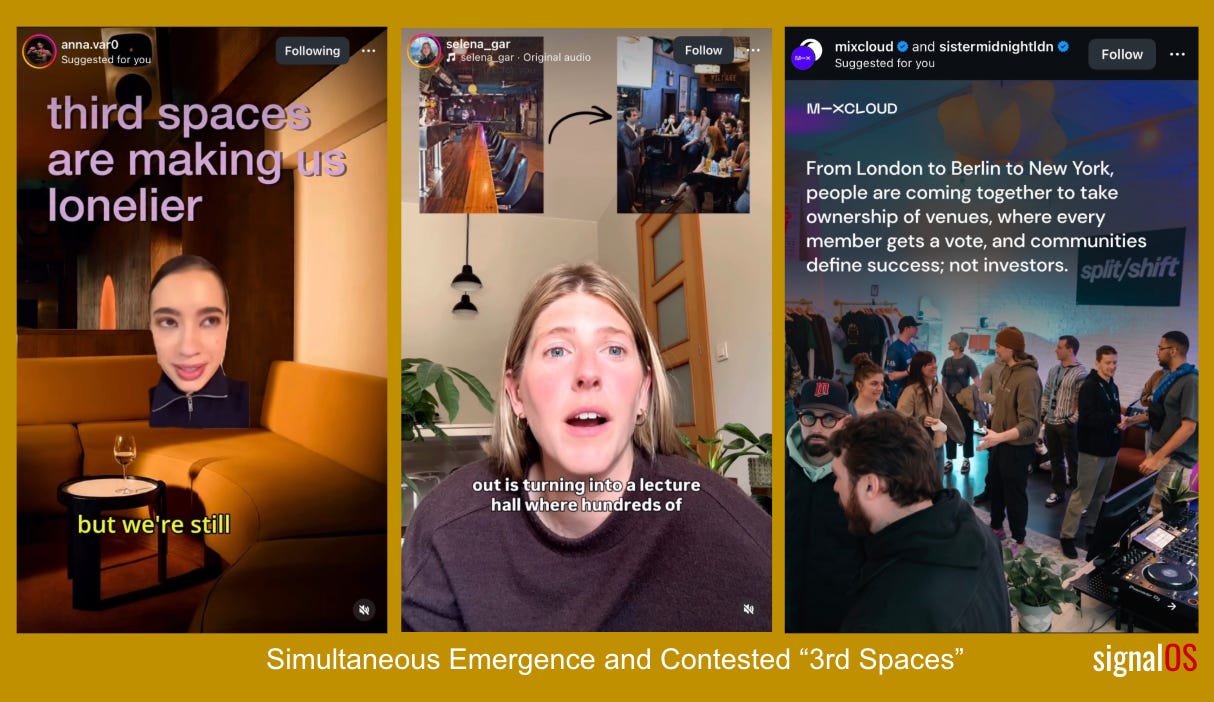
Not all movements carry the same risk. The stage matters more than the language itself.
Emerging: From weeks to months old. Small but growing audience. Meaning is still contested even among supporters. Opposition hasn’t organized. The strategic question here isn’t whether to adopt. It’s whether this is worth watching.
Mainstream: From months to a couple of years old. Large audience, growing fast. Corporate adoption beginning. Opposition starting to form. This is where the decision gets real: does this align with what your brand actually stands for? Can you adopt it authentically, not just strategically?
Contested: One to three years later. Divided audience. Both support and opposition are organized and visible. Meaning is fracturing: different groups using the same language to mean different things. Adoption at this stage is a political choice. Know that going in.
Declining: The cycle is turning. Supporters quieter, opposition louder. Corporate retreat accelerating. The question shifts from whether to adopt to how to exit without looking like you were just chasing the trend to begin with.
The implication: you need to know which stage the cultural cycle is in before you make a move. And you need to accept that the time you have inside each stage is shrinking.
So how do you navigate a cycle you can’t fully predict? Start by knowing where you are within it.
Three things to do right now
Build real-time visibility (or close to it, depending on your brand). Quarterly trend reports are calibrated to a cycle that’s already obsolete. You need to know what movements are emerging, how fast they’re spreading, who’s adopting them, and whether opposition is organizing before they reach mainstream. This should be a marketing, brand, and communications focus.
Develop your framework before you need it. What values must your brand align with for you to consider adoption? What’s your threshold: emerging, mainstream, contested? What’s your exit strategy if the movement becomes radioactive? What’s your narrative for adoption, for shift, for retreat? Document this now, socialize it, align on it before you’re in the room facing a live decision.
Ground your brand purpose before you move fast. Here’s the counterintuitive part: speed without authentic grounding looks like trend-surfing opportunism. The brands that navigate this well aren’t the ones that predict perfectly, they’re the ones that know exactly what they stand for and can evaluate any emerging trend against that foundation quickly and authentically. Deep grounding is what makes fast movement credible.
(PLUG: At Medtronic, the content and creative team and social team inserted ourselves into the Artemis Moon Mission conversation by creating a video about medical devices in space. The content was rooted in something true about who we are, not a trend we were chasing, but Artemis was a trend we could join with authenticity).
The bottom line
The Wide Awakes took 70 years. We’re heading toward cycles that complete in weeks and months.
This is your new operating environment. Not a crisis to avoid, but a system to understand.
The brands that will navigate it aren’t the ones with perfect prediction. They’re the ones that stay grounded, identify the smart opportunities (and act on them quickly), and communicate authentically through their brand (“brand resonance”).
Speed rooted in authenticity is the new stability (that’s the algorithm).
The cycles are collapsing. The question is whether your organization is calibrated to the way cycles exists now.
Source Code: Ever since I was an alt-punk teenager, I’ve been attuned to cultural patterns. Having chosen to be “on the outside” back then, you grow a skepticism for what is labeled as “popular.” You tend to question the reason for things, and as a teenager, often cynically. That skepticism is still running. :)