


A few years ago, a colleague at Medtronic, Tim Laske, Vice President of Research and Development in our Cardiac Ablation Solutions business, came to our content & creative team with an interesting and seemingly unusual proposition. He was working with the Smithsonian Conservation Biology Institute, and several other global organizations and zoos, providing cardiac monitoring devices for use in animals. Wolves. Bears. Apes. Anteaters (and more). The work has spanned nearly three decades and 27 wild species, with hundreds of devices donated and countless hours volunteered.
He thought it might make an interesting story. He was right. But not for the reason we expected.
The real problem we were trying to solve
In cardiac care, one of the most important decisions a patient faces with their doctor is their treatment, which can include implanted therapies. As a brand communications team inside one of the world’s largest medical technology companies, our job is to create content that moves people toward that conversation with their doctors, with their families, and with themselves. But many times as we tried to address this directly, we ran into challenges. The topic was emotionally heavy, plus working within a regulatory environment meant we had to be very precise in how we discussed it.
For a brand-building campaign, not for a specific device or therapy promotion, we needed a sort of distance, a buffer, between the awareness of the therapy and the potential patient’s discussion with their medical provider.
We just didn’t know it yet.
The animal stories
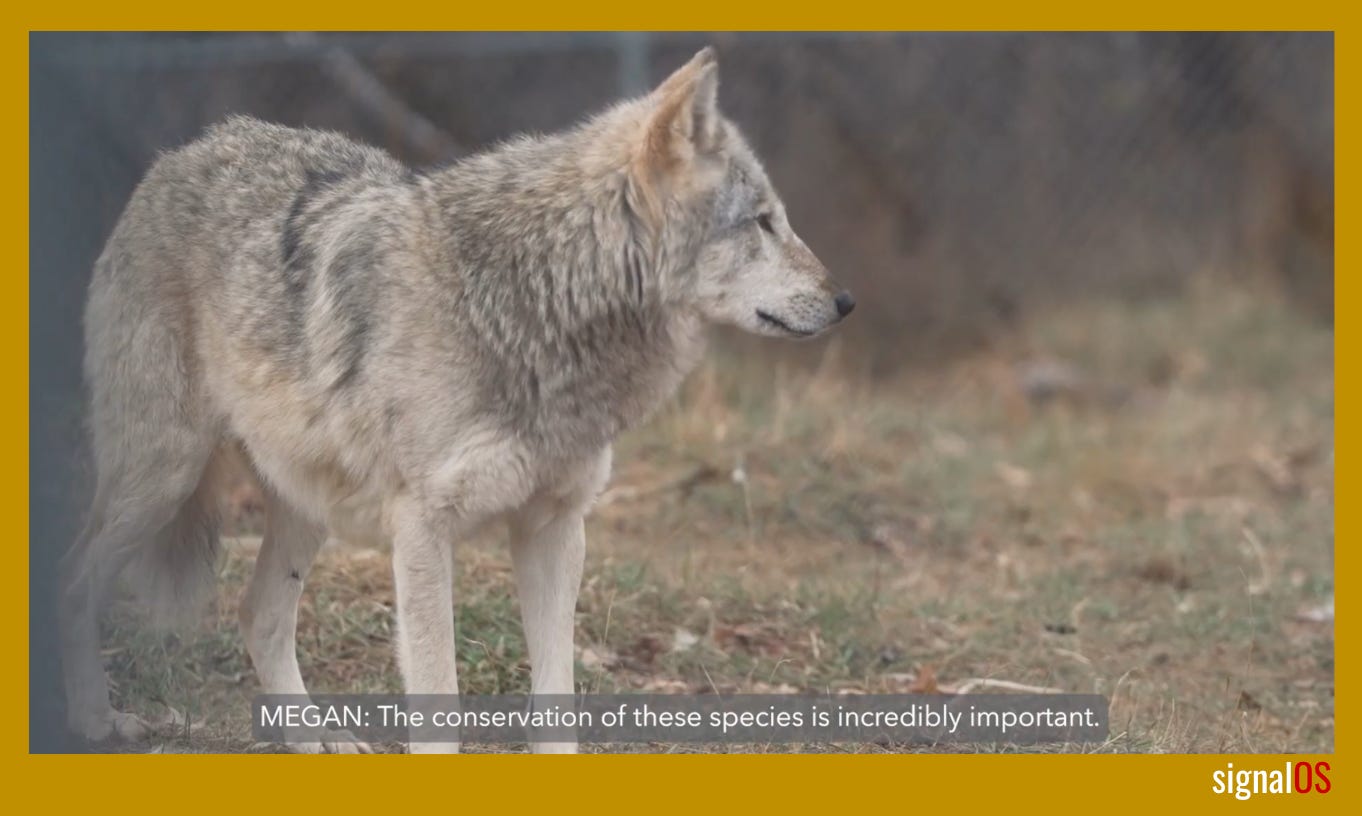
We posted the first piece, back in 2023, a video story on youtube about how Medtronic technology is being used to protect and study wolves by monitoring their stress and heart health, and watched what happened.
The traction was immediate. People were watching it organically. They were engaged with a story about cardiac devices without the direct correlation to a human condition.
That’s when the insight became apparent. The animal was a proxy. A safe distance between a difficult topic and the people who needed to learn about it. Close enough to be relevant, these were real cardiac devices, real procedures, real outcomes, but with enough distance to feel approachable. Nobody’s afraid of the big bad wolf. Well, almost nobody.
We did a series. Bears. Apes. Anteaters. Each one a story about cardiac care, told through a creature that allowed the viewer to understand the technology without emotional burden. In fact the series was a celebration.
The constraint that became the strategy
Here’s where it matters from a Signal OS perspective.
When we brought this to legal and regulatory (as you do inside a regulated healthcare company) they had requirements and recommendations. As long as we kept within these guardrails, we could tell the story. Think of it like writing a poetic sonnet or a haiku: within the guardrails, beauty can take place.
The constraint was the concept.
This is something I’ve seen over and over inside complex organizations. The limitation that legal or regulatory (or leadership) puts on your idea isn’t always the obstacle. Sometimes it uncovers the insight you didn’t know you needed to make those limitations work in your favor.
What happened next
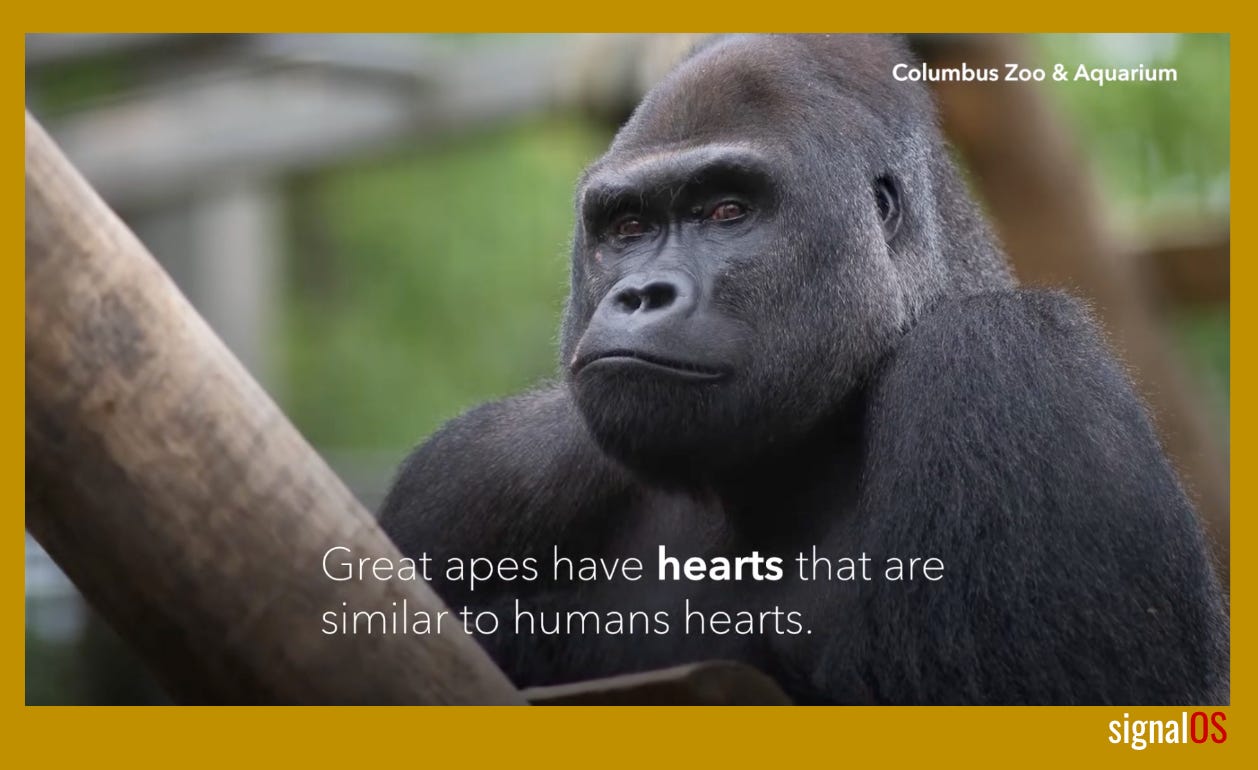
The series built momentum over a two year period. Steady traction, growing audience, genuine engagement from people who found the stories surprising and warm and worth sharing.
In 2023 this story was picked up by the Star Tribune. Then in 2025 the CBS Evening News covered the story (this time a clouded leopard was the star)…a genuine earned media result built on authentic storytelling. (Full credit to Boua Xiong and the Medtronic PR team who brought it home!)
The proxy held. All the way to earned media at scale.
The proxy principle, applied

Humans have understood the proxy principle instinctively for centuries. Marionettes and puppets across cultures were used to tell stories too difficult, too sacred, or too politically dangerous to tell directly. The puppet creates the distance. The audience does the rest.
Today’s audiences still, for all kinds of reasons, might not want to engage with something directly. In these cases, don’t force a direct conversation. Determine a proxy. Create enough distance between the solution and the decision where people can approach it without a response that shuts them down.
The proxy is an act of empathy. You’re meeting people where they actually are, not where you wish they were. And sometimes the thing that forces you to keep the distance is the best thing that could have happened to your idea.
The question for your work
What’s the difficult conversation your audience is avoiding?
What proxy exists // the unexpected angle, the sideways approach, the anteater // that creates just enough distance for them to engage?
Find that, and you’ve found your way in.
Edge Cases
The proxy principle works when the audience makes the connection themselves. The distance between the proxy and the real topic has to be close enough to be felt but far enough to lower the fear or rejection response. Get that distance wrong in either direction, too close and the fear returns, too far and the relevance disappears, and the proxy fails silently. You’ll get engagement on the animal story with no movement on the underlying decision. Worth testing the distance before you scale it.